

Upstream Oil and Gas Production Software: Why a Mobile App is a Necessity
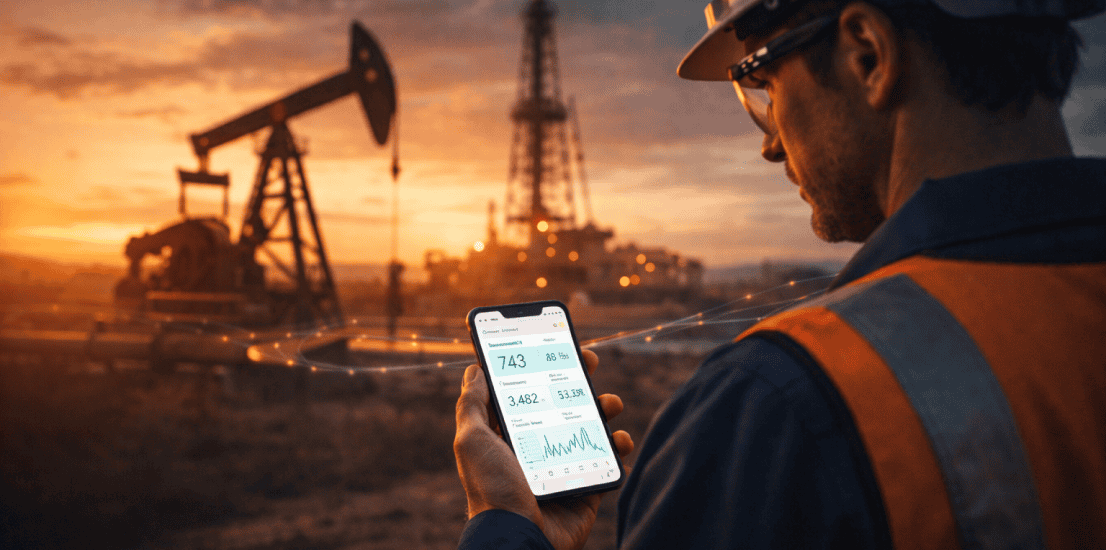
Oil and gas field operations have become increasingly complex. Teams are spread across remote locations, managing multiple systems, and trying to keep production running smoothly while maintaining safety and compliance. Many upstream operators are still relying on outdated processes or a patchwork of disconnected applications to manage their daily work, and field operators find themselves logging into five, six, or even more apps just to complete basic tasks. All that time spent navigating between systems is time not spent on actual production work. A mobile app designed specifically for oil and gas production operations changes everything. When field teams have a single, intuitive tool that works wherever they are, including areas with no cell signal, the entire operation runs more efficiently. Real-time data flows from the wellhead to the back office, decisions happen faster, and costly delays become a thing of the past.
Eliminate the Multi-App Chaos
Without a unified mobile solution, a field operator’s day becomes an exercise in app-hopping. They arrive at a well site and need to run a safety audit through one application. Then they enter tank and well data into a separate field data capture system. When they discover a leak, that goes into an environmental compliance app. A full tank triggers a dispatch request through yet another system. Work orders? Different app. GPS tracking? Running in the background. Communications? Scattered across email, text messages, and team chat tools.
The cognitive load is staggering. When you calculate the mental operations needed to manage information across this many channels and interfaces, field operators are spending more brainpower on administrative juggling than on their actual expertise. A purpose-built mobile app consolidates all these functions into one place. Safety audits, production readings, dispatch requests, work orders, compliance documentation, and communication all happen within a single interface. Field operators learn one system instead of many, and they spend their mental energy where it belongs: keeping production running and staying safe.
Work Offline Without Losing Data
Remote well sites rarely have reliable cellular coverage. Oil and gas operations happen in places where connectivity is spotty at best and nonexistent at worst. A mobile app must work offline reliably. The best production software stores changes locally when there is no signal and automatically syncs everything once connectivity returns. Operators can continue capturing production data, completing inspections, and logging downtime without worrying about losing their work. When they drive back into range, the system handles the rest.
Without offline capability, field teams either delay data entry until they return to an office or resort to paper notes they transcribe later. Both options introduce errors and slow down the information flow that keeps production and accounting aligned.
Real-Time Visibility for Faster Decisions
When production data sits in a silo until someone manually transfers it, problems can go unnoticed. A tank fills up and backs up a well because nobody knew it was reaching capacity. An equipment issue that could have been a quick repair becomes a major shutdown because the work order got delayed.
Real-time sync changes the equation entirely. As field operators enter data, it becomes immediately visible to the remote operations center, production accountants, and anyone else who needs it. Allocation networks can trigger automatically once enough data arrives for the day, meaning accountants no longer wait until the next morning to identify exceptions. Errors surface within hours instead of days. When everyone sees the same information simultaneously, coordination improves dramatically. Dispatchers know exactly where each operator is located and what they have completed. Work can be reassigned on the fly based on real conditions rather than outdated schedules.
Built-In Validations Catch Errors Early
Data quality matters enormously in oil and gas operations. A misread gauge or a transposed number can ripple through allocation calculations and financial reports. By the time an accountant spots the error, days have passed, and tracking down the correct information becomes a frustrating exercise that pulls field operators away from current work.
Smart mobile apps validate data at the point of entry. Min/max range checks catch readings that fall outside expected parameters. Automated rules flag inconsistencies before the data ever leaves the device. Operators immediately see when something looks wrong and can verify it on the spot while still standing at the well. The result is cleaner data reaching the back office and far less time spent chasing down discrepancies after the fact.
Easy Adoption Even for Non-Technical Users
Field teams include people with varying levels of comfort with technology. Some pumpers have decades of experience but have never needed to learn complex software. Any mobile app intended for widespread field use must be intuitive enough that someone with a minimal technical background can become productive quickly.
The best solutions allow operators to configure each site in the order that matches their actual workflow. Drag-and-drop templates make setting up tasks and forms straightforward. When the interface reflects reality on the ground, adoption happens naturally. Users who feel comfortable with their tools enter better data and embrace the system rather than working around it.
Experience the Best Upstream Oil and Gas Production Software from W Energy
Your field teams deserve software that works as hard as they do. W Energy’s Production & Operational Management Software brings together field data gathering, field service management, and production accounting into a single, unified system that works on both iOS and Android devices. Field teams gain access to forms, tasks, gauges, downtime tracking, well tests, run tickets, production insights, work orders, and geolocation tools all within one native app. Offline capability ensures continuous operation in remote areas, while real-time sync keeps everyone aligned once connectivity returns. Smart dispatching optimizes task assignments based on schedule, location, skills, and priority. Built-in validations protect data quality, and automated task triggers reduce the need for manual follow-up.
With W Energy, you can increase field visibility by 300% while turning allocations into two days of work instead of ten. Request a demo today and discover the difference a field-first approach makes.