

How Data Analytics Is Transforming the Oil & Gas Industry
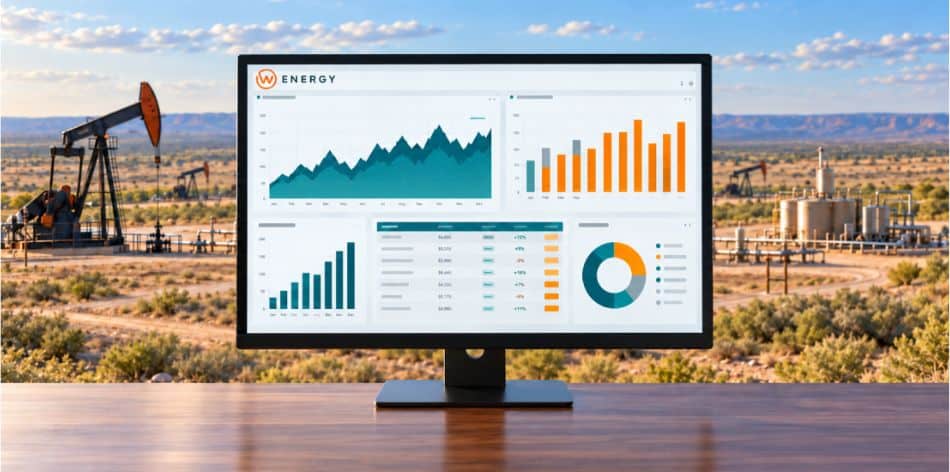
Data analytics is transforming the oil and gas industry by giving operators a near-real-time view of production, spending, and financial performance, so teams can act on what is happening
Today, instead of waiting for month-end reports. For upstream and midstream companies, that means faster decisions, cleaner numbers, and fewer surprises when margins are on the line.
Solutions like W Energy’s DataView pull field and back-office data into a single governed model, turning scattered spreadsheets into insights anyone on the team can use.
Why Oil & Gas Data Analytics is More Critical Than Ever
Oil and gas data analytics closes the gap between the data operators already collect and the decisions they need to make with it. Deloitte’s 2026 oil and gas industry outlook points out that with shale productivity gains flattening and assets aging, digitally enabled operations are becoming the next frontier for competitiveness, and that real-time analytics are moving from pilots to enterprise-wide deployment. Companies that get their data house in order build a real competitive edge, while those leaning on manual reporting keep losing time and margin.
Watch Casey Harrison and Michael Tanner discuss why actionable insight matters, and how to get there, in the video below.

The Most Common Data Challenges in Oil & Gas Operations
Most operators are data-rich and insight-poor. The information exists somewhere, but pulling it into a usable form is where things break down. Here are the hurdles we hear about the most.
Limited Real-Time Visibility
Teams cannot always monitor operational and capital spending as it happens. In a market where prices move quickly, waiting until the next morning to catch an allocation error or a cost overrun slows every decision behind it.
A Shortage of Skilled People
There is a real talent gap in accounting and data management. Lean teams especially struggle to stand up and maintain complex systems, which leaves valuable data sitting unused.
H3: Tracking OPEX and CAPEX
Keeping operational and capital costs under control gets tricky when commodity prices shift. Upstream teams juggling Authorization for Expenditures (AFEs) and field spend, and midstream operators watching plant and pipeline costs, both need clear visibility to defend margins. Without a clear line of sight into spending, protecting profitability turns into guesswork.
Scaling Through Growth and Mergers
Folding new assets and systems into the business is messy work. Consolidation is a constant across the oil and gas industry, and every acquisition brings another chart of accounts, another well list, and another set of records to reconcile. Mismatched data and accounting processes create inconsistencies that snowball into bigger problems later.
Disconnected Systems
When data lives in separate tools that do not talk to each other, teams fall back on manual entry, copy-paste errors, and stale reports. The outcome is a patchwork view of a business that needs a single source of truth.
What’s Possible with Modern Oil & Gas Reporting Software
The right oil and gas reporting software flips those same challenges into opportunities. Here is what changes when your data starts working for you.
Real-Time Decision-Making
Live data and analytics reach the corporate office as events unfold, so leadership can respond in hours rather than days. An upstream operator can spot a production dip the same day it happens, while a midstream accountant can flag a volume imbalance before it reaches the close. Faster answers lead to sharper calls.
Stronger Collaboration
Shared dashboards break down the wall between field and corporate. Everyone works from the same numbers, which builds trust and keeps departments aligned on the same goals.
More Efficiency, Less Busywork
Integrated systems automate repetitive tasks, cut errors, and free your people to focus on analysis instead of data wrangling.
How DataView Empowers Oil & Gas Teams
Dataview is W Energy’s business intelligence solution, built directly into the Stream+ platform. It aggregates and normalizes data from across your operation, from field service and production to land and accounting, then presents it in plain language anyone can read.
A field supervisor can check production trends while a CFO reviews financial performance, all from the same governed data model. Standard reports and embedded dashboards take the manual aggregation off your plate, and with embedded PowerBI, users tailor reports to their exact needs. DataView also connects with Tableau and Spotfire through direct access to the data model, so it fits the tools your team already relies on.
Take the Next Step Toward Smarter Oil & Gas Analytics with W Energy
Better decisions start with better access to your data. W Energy’s oil and gas business intelligence platform gives upstream and midstream operators a single source of truth from field to finance, with the flexibility to scale as you grow. No more waiting on month-end, and no more chasing numbers across disconnected systems.
Request a demo from W Energy today, and see what DataView can do for your operation.
Resource:
www.deloitte.com/us/en/insights/industry/oil-and-gas/oil-and-gas-industry-outlook.html