

How Oil and Gas Software Solutions Are Transforming Production Reporting
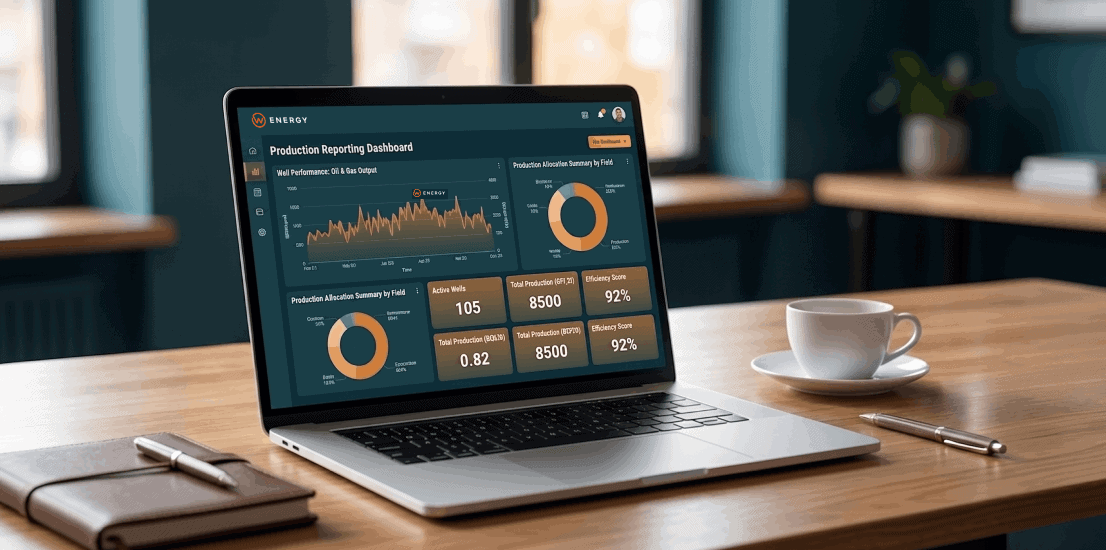
Production reporting in oil and gas has shifted from a back-office exercise into a real-time business function that directly shapes operational and financial decisions. Modern software solutions pull data straight from the field, normalize it, and surface it through dashboards that engineers, accountants, and executives can all use without needing a translator. The result is faster month-end closes, fewer reporting errors, and quicker reactions to what’s actually happening at the wellhead or plant. For upstream and midstream operators, the days of stitching together spreadsheets and emailing PDF reports are giving way to integrated platforms that connect field operations to finance and put trustworthy data into the hands of the people who need it most.
Common Challenges in Oil and Gas Production Reporting
Disconnected Systems and Data Silos
Many operators run separate tools for SCADA, field data capture, accounting, and land management. When these systems don’t talk to each other, accountants spend hours reconciling volumes, and engineers chase down numbers that should have been at their fingertips. Reporting becomes a hunt instead of an analysis.
Manual Data Entry and Excel Dependence
Spreadsheets still carry a heavy load in many back offices. While Excel has its place, leaning on it for production reporting introduces version-control problems, formula errors, and audit headaches. A single broken link can throw off a monthly close.
Delayed Visibility into Operations
When production data takes a day, a week, or longer to make its way into a report, decision-makers are always looking backward. By the time a downtime issue or allocation imbalance shows up in a report, the opportunity to fix it cheaply has often passed.
Compliance and Audit Pressure
Regulatory reporting demands precise, traceable numbers. Without a clear audit trail showing how a volume or revenue figure was calculated, operators face risk during audits and disputes with partners or royalty owners.
Benefits of Oil and Gas Production Reporting Software
Real-Time Decision Making
Purpose-built reporting software pulls data as it’s captured, so the field, the back office, and leadership are all looking at the same numbers. A production engineer can spot an underperforming well in the morning rather than three days later, and accounting can run allocations the same day volumes come in.
Faster Month-End Close
Integrated reporting eliminates the scramble at month-end. When data flows automatically from field capture through allocations and into accounting, closing the books takes hours instead of days. Reruns happen quickly when corrections are needed, which means fewer prior-period adjustments down the road.
Improved Data Accuracy
Built-in validations, exception flags, and automated reconciliations catch errors before they make it into a report. Operators stop chasing the same mistakes month after month, and partners gain confidence in the numbers they receive.
Better Cross-Department Collaboration
Operations, accounting, land, and finance all need the same underlying data, just sliced differently. A unified reporting layer gives every team a shared source of truth and removes the friction of swapping files back and forth.
Scalability as the Business Grows
Acquisitions, divestitures, and new asset types put pressure on reporting systems. Software built to scale absorbs new wells, plants, and contracts without forcing a rebuild every time the portfolio changes.
Choosing an Oil and Gas Production Reporting Software
Look for Industry-Specific Functionality
Generic BI tools can produce pretty charts, but they often miss the nuances of allocations, division orders, and joint venture accounting. Software designed for oil and gas understands the workflows out of the box.
Prioritize Integration Capabilities
The reporting tool should connect with your accounting, land, production, and field data systems without expensive custom work. APIs and pre-built connectors matter more than promises.
Evaluate Speed and Performance
Slow software costs money. Ask vendors how long a typical month-end process takes and how quickly a rerun completes. Speed enables the kind of iteration that improves accuracy.
Demand Transparency in Calculations
If you can’t see how a number was calculated, you can’t defend it during an audit or a partner dispute. Tools that trace every formula and variable behind a result save countless hours.
Consider Flexibility and Customization
Every operator runs a slightly different business. Reporting software should let you build the dashboards and reports your team actually needs, not just the ones the vendor pre-packaged.
Discover DataView™ from W Energy
Production reporting works best when the tool was built for the people using it. W Energy’s DataView™ solution gives upstream and midstream operators a near real-time view of operations by pulling data from across the W Energy platform and surfacing it through dashboards that anyone can navigate. No data science degree required. DataView integrates with Power BI, Tableau, and Spotfire, so teams can keep the BI tools they already know while gaining a scalable data model purpose-built for oil and gas. Pre-built reports get teams productive on day one, and customizable dashboards grow with the business.
Want to see what better production reporting looks like? Request a demo, and we’ll show you how DataView can transform the way your team works with data.